
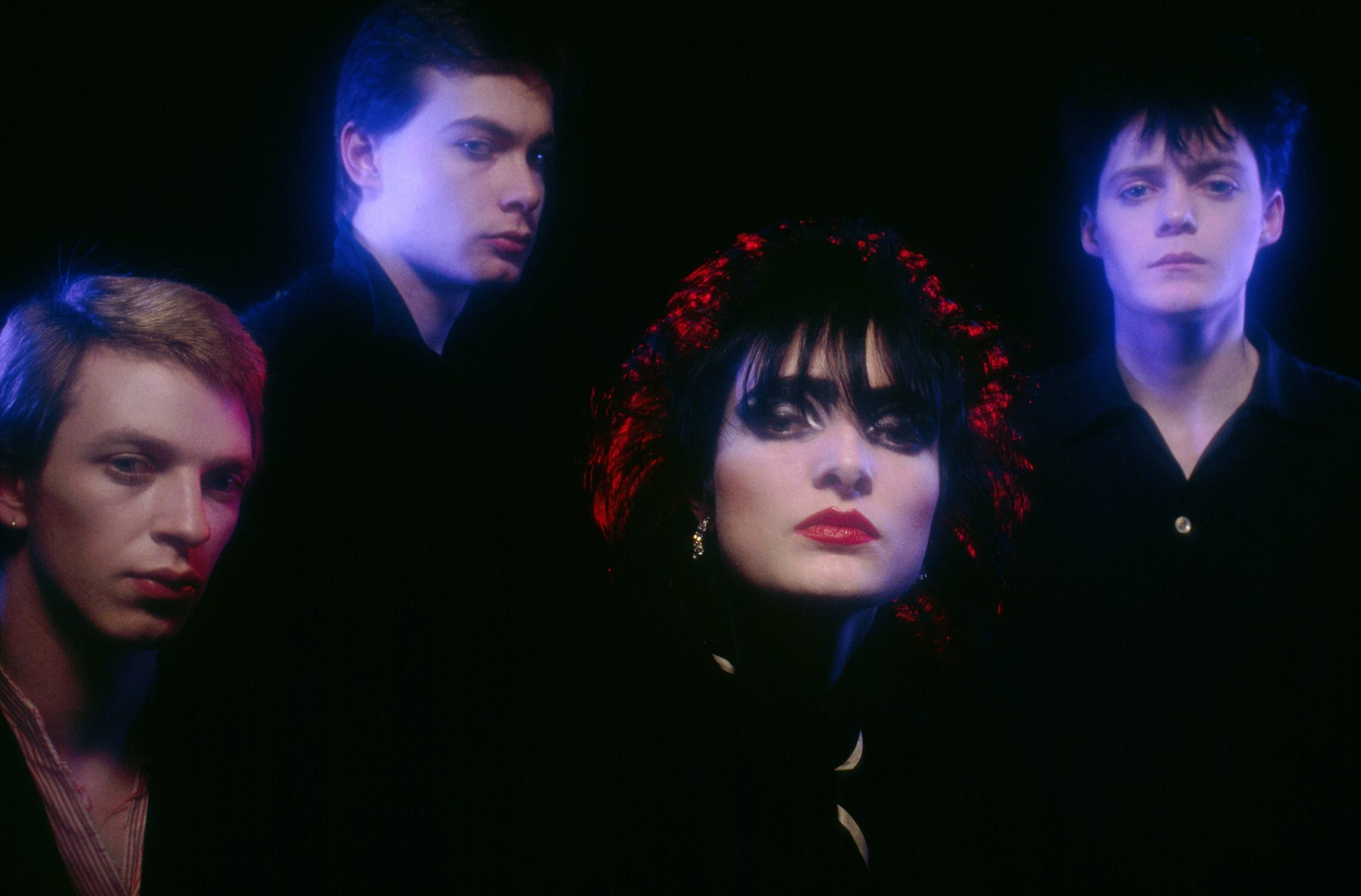
Kenny Morris, the original drummer for pioneering British punk band Siouxsie and the Banshees – save for one noisy gig with his friend and future Sex Pistol Sid Vicious bashing away at the kit – has died. He was 68.
His death was announced by music journalist and longtime friend John Robb yesterday. No cause or specific date of death was given.
Though his stint with the influential goth rock band was brief – 1977-1979 – and pre-dated the group’s string of MTV-era hits (“Face To Face,” “Kiss Them For Me,” “Spellbound,” “Peek-a-Boo”) his tribal-drumming style, heavy on the toms with plenty of echo and few fancy cymbal flourishes, left a lasting impact on both the Banshees and New Wave groups to follow.
Morris “had been at the heart and soul of the early punk scene,” Robb wrote in the tribute announcing his friend’s death. While studying fine art and filmmaking in London in the mid-1970s, Morris briefly joined his friend John Simon Ritchie (newly rechristened Sid Vicious) in the early punk band Flowers of Romance.
“He then saw the Banshees’ first gig with Sid on the drums at the legendary 100 Club Punk Festival in September 1976 and asked to join the band when Sid left after his one and only gig with the band,” Robb writes.
Born Kenneth Ian Morris in Essex, England, on February 1, 1957, Morris, Robb notes, learned to drum “as he went along and his distinctive and lyrical style was a key and profound influence on punk and post punk and can be heard all across goth or in the drumming of Joy Division and New Order drummer Stephen Morris, who quotes him as a key influence. He not only reinvented drums but looked cool as fuck, like in this clip, where the feline cat like drummer delivers one of the most iconic drum parts of the period and beyond (later sampled by Massive Attack for their 1997 track ‘Superpredators.’”)
Morris played on the Banshees’ first two albums – 1978’s The Scream and 1979’s Join Hands. The albums sold moderately well in the UK, and the non-album single “Hong Kong Garden” reached the UK Top 10 in 1978.
Before the band developed its more commercial, poppier New Wave style, Morris and guitarist John McKay quit following a band argument during a record signing event in September 1979, leaving Siouxsie and the Banshees to scramble for replacements while in the midst of its Join Hands tour.
Morris continued to drum post-Banshees, most notably with Helen Terry, a singer who found some international exposure in the early- to mid-1980s as a back-up singer for Culture Club most famously on recordings and videos of “Time (Clock of the Heart)” and “Church of the Poison Mind”).
Eventually Morris prioritized art over music. He left London in 1993 to study art in Ireland, and ran an art gallery in Kildare later that decade. He most recently resided in Cork, making and teaching art. In 2024 he named a Dublin art exhibit of his work “A Banshee Left Wailing.” According to reports, he had written a memoir that is scheduled for publication this year.
“Kenny was a friend of ours, and it was always a pleasure to see and hang out with him when visiting Cork in Ireland, where he had been living,” Robb wrote in the tribute. “He was sweet, articulate, artistic and fascinating company and his beautiful eccentricity was adorable.”
Leave a Reply