
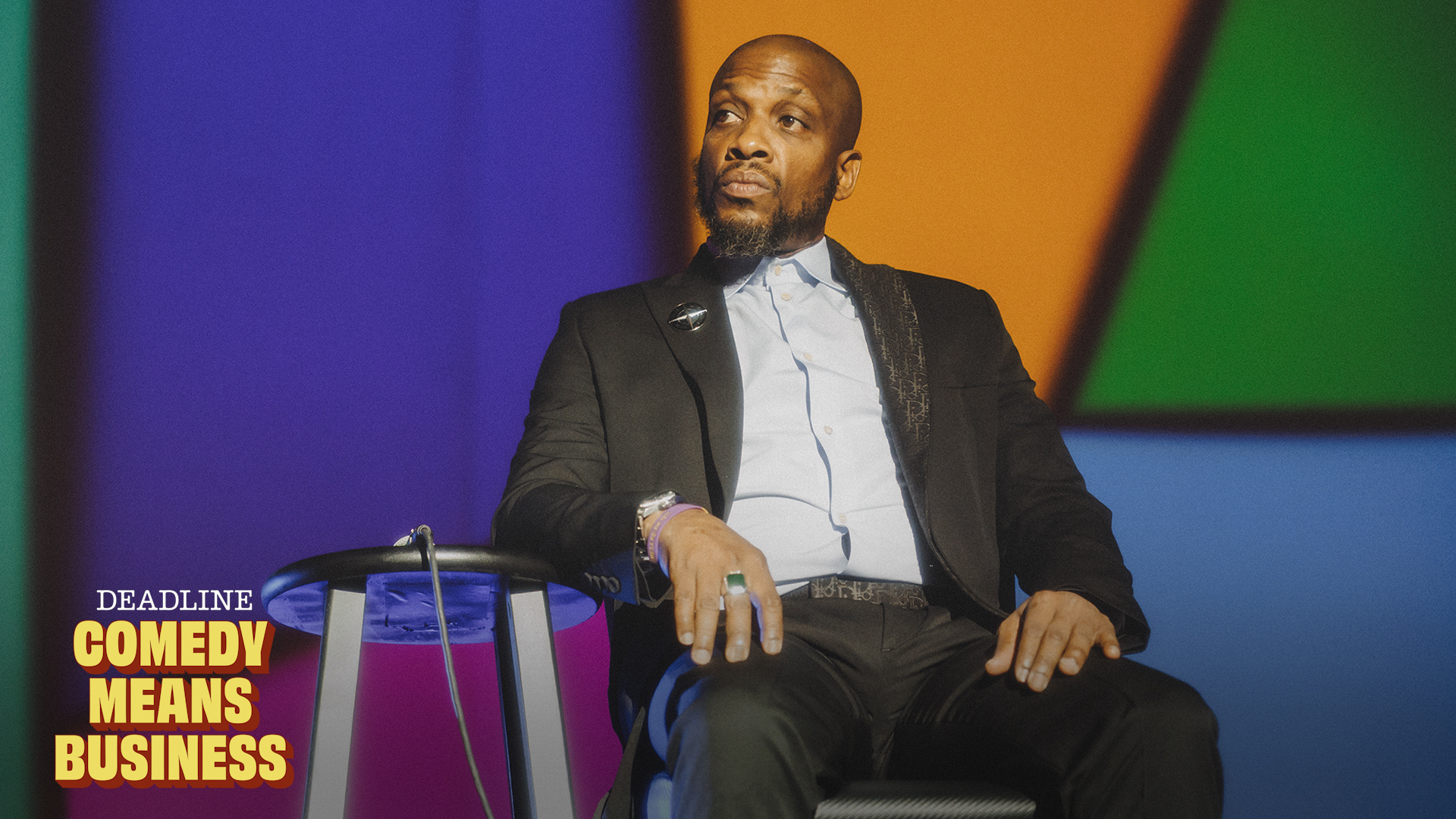
As a comedian, Ali Siddiq is a paradox — someone who is putting up some of the biggest streaming numbers in the business and selling hundreds of thousands of tickets, yet has not been embraced by Hollywood and not quite broken into the mainstream.
When lists of top comics are written, Siddiq notes, he’s “never really” brought up.
“But who has a better body of work?” he asks.
Unusually prolific, with a longform storytelling style all his own, Siddiq is known for shooting multiple specials back-to-back; last year, he put out three, which at time of reporting have accumulated 24.2 million views on YouTube. Nielsen numbers reviewed by Deadline placed him alongside the likes of Nate Bargatze and Jeff Dunham in terms of impact on streaming in 2025, with his hour My Two Sons coming in as one of the most-viewed on any platform last year.
Siddiq is also an innovator. With The Domino Effect, he approached the unusual task of crafting a series of interconnected, autobiographical specials, tracing his life from childhood to a six-year incarceration, which also notched huge viewership.
Watch on Deadline
Working as a stand-up since the late ’90s, Siddiq seems to crave a certain level of mainstream recognition. In an appearance on our Comedy Means Business podcast, he shares that he has campaigned for awards for years, to no avail, frustrated at the industry’s disregard of work that is self-distributed.
“What difference does it make where [a special’s] at,” he asks, “if people enjoyed it and it was good work?”
The situation highlights a disconnect: How can a special be reaching millions of passionate fans, and yet be so easily ignored by awards voters, in favor of the same rotating set of A-list nominees?
Refusing to be “defeated,” though, by “their lack of consideration,” Siddiq has kept putting himself out there — and finally broken through. In late February, his special My Two Sons became the first independently produced hour to win a major honor, when it picked up an NAACP Image Award for Variety Series or Special.
“The nomination definitely felt rewarding as an independent because that was the whole purpose of constantly plugging at the Emmys and the Image Awards with an independent project, hoping that at one point independents will get recognized for their work,” Siddiq says.
Like our last guest, Max Amini, Siddiq is the kind of comedian streamers should be competing to sign to a multi-special deal — someone with a real body of work and dedication to his craft, whose fans are devoted enough to follow him wherever he goes.
But if Siddiq has been overlooked, his history of going direct to consumer on YouTube with his work is not just reactive to that fact, but rather a strategic move.
While Siddiq had made appearances on BET’s ComicView and HBO’s Def Comedy Jam early in his career, he first got a real feel for releasing his work through mainstream channels in 2018 — and it was informative. After releasing the special It’s Bigger Than These Bars with Comedy Central, he went to go promote it on Instagram — and was flagged for copyright infringement on his own work.
“I didn’t like that feeling,” he says. “So I decided, man, I want to just own my own stuff.”
Feeling that the direct-to-consumer move is a smart move for comics — and a reflection of where the business is headed — Siddiq says “it would take a significant amount of money” and “a significant amount of negotiation about ownership” to entertain a streamer deal at this point.
“Realistically, I don’t foresee it,” he admits. “I’m just floating on my own cloud.”
For years, the lore around Siddiq is that he found his voice as a comedian while imprisoned in his 20s for drug dealing. But the Houston native sets the record straight in conversation with Deadline, saying, “That’s crazy because that’s not true. That’s just something somebody wrote years ago; I haven’t been able to die that down with people yet.”
Siddiq first got into stand-up upon his release from prison, yet this fabricated origin story “just keeps being repeated,” he says, “because I was in prison and I happened to be a jovially sarcastic, funny dude while I was there.”
Truthfully, he says, “It’s a bunch of them there; I wasn’t the only one. But I’m the only one that got out and probably pursued stand-up.”
Siddiq first blew up online following an early appearance on Ari Shaffir’s Comedy Central series This Is Not Happening with a story about a prison riot — the first he went into about that experience, after performing for many years, not wanting to be defined early on by that one particular time in his life.
Recently, Siddiq has climbed from selling out 750 to 1,500-seat theaters to 2,000-3,000 cap venues while adding shows in some markets — and now, he’s approaching his first arena show as part of his new national Custom Fit Tour starting in April.
While rising in the industry, Siddiq has taken every opportunity to bring other comics along with him, spotlighting and helping others to elevate, as comics like D. L. Hughley and Bill Bellamy did for him. Last year, he exec produced specials from Marcus D. Wiley and Ryan Davis, and released them through his channel, seeing both accrue millions of views. And this year, he’s doing the same.
“I never want to be the only one,” Siddiq told me on the pod. “If I say I believe in you, I don’t just believe you in words. I believe in you in actions and financially.”
In his appearance on Comedy Means Business, Siddiq goes deep into his efforts to cultivate a singular comedic voice, talking about testing out material in barbershops, self-distribution, and why he considers the ubiquity of crowd work detrimental to the craft of stand-up. For the full conversation, where he shares his goal of selling out the Toyota Center in Houston, plans for a self-distributed sitcom, and more, click above.
Leave a Reply