
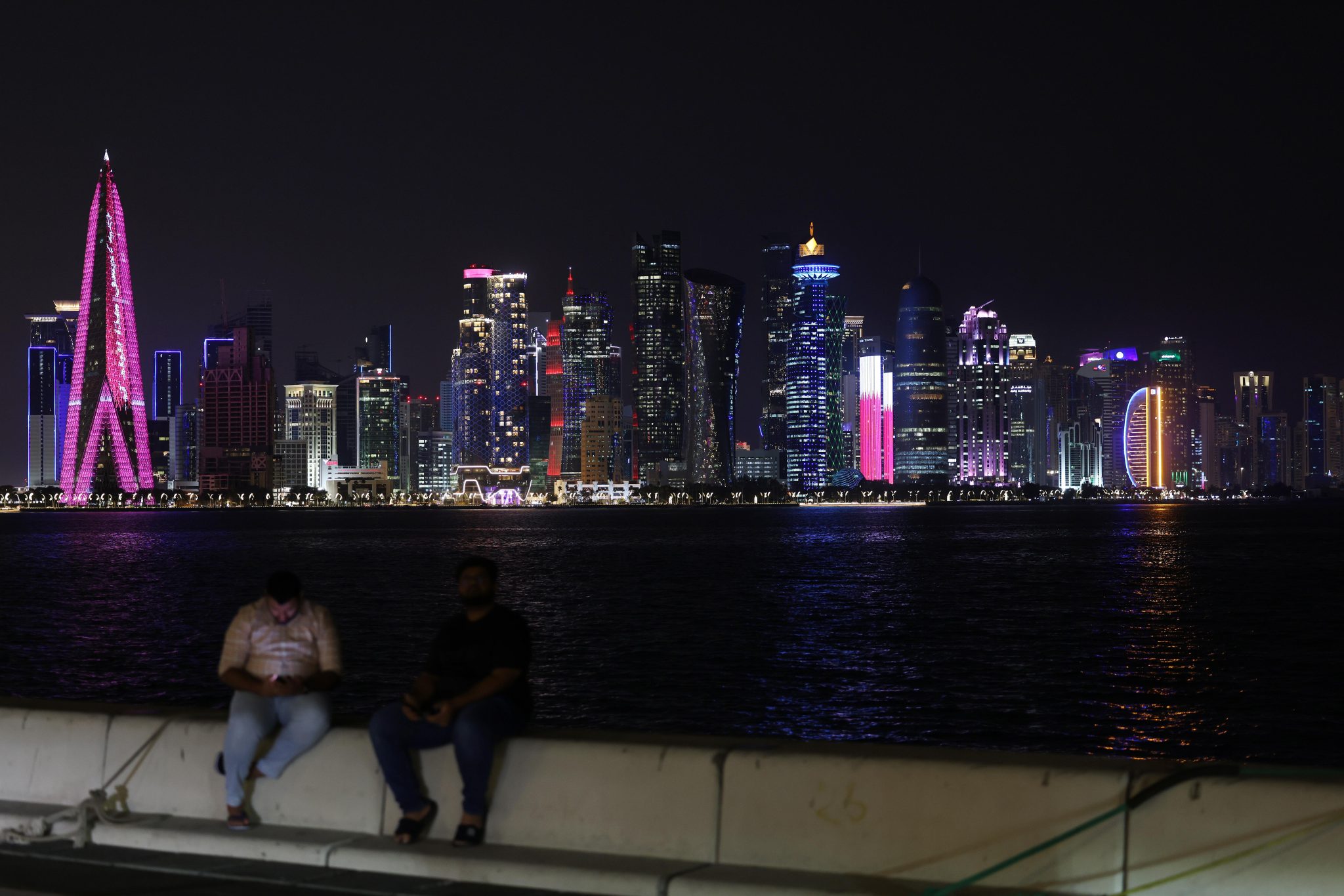
Qatar’s Doha Film Institute (DFI) has moved its annual project and talent incubator Qumra online due to the ongoing U.S.-Israel-Iran war which has spilled out into the entire Gulf region and beyond.
“In light of the recent developments in the region, we have made the difficult decision to hold this upcoming edition of Qumra online to ensure the safety and wellbeing of our guests, projects and team,” the DFI wrote in a statement on Tuesday.
“The programme dates will remain 27 March to 1 April 2026, and the online format will focus primarily on private one-on-one mentorship sessions for the selected projects,” it detailed. “While we are deeply saddened by the current circumstances, our unwavering commitment to provide meaningful exchange and mentorship for selected projects through Qumra remains a priority.”
The 12th edition had been due to unfold in Doha with Diego Luna, Gael García Bernal, Alice Diop, Faouzi Bensaïdi and Gustavo Santaolalla in attendance in the role of Qumra Masters, who give masterclasses and mentor filmmaker attendees.
Watch on Deadline
They would have joined the directors and producers of some 50 selected DFI-supported film and TV projects, as well as another 200 film professionals from across the cinema chain, who advise the projects in different stages of development and production. This has all now been shifted online.
The bespoke event usually takes place in Doha’s Museum of Islamic Art as well as in and around the city’s downtown Mushaireb neighborhood.
Over the course of its previous editions, Qumra has become an important springtime meeting for directors and producers from across the Middle East and North Africa and beyond, with the event also inviting a smattering of non-MENA grantees.
Its 2025, attendees included Hasan Hadi’s The President’s Cake, which went on to win Cannes’ Caméra d’Or and make it onto the shortlist for the Best International Feature Film Academy Award; Erige Sehiri’s Promised Sky, which opened Cannes Un Certain Regard, and won best film at Marrakech, and Suzannah Mirghani’s Cotton Queen, which debuted in Venice.
It’s not the first time the Qumra has been impacted by events beyond the DFI’s control. Following its successful launch in 2015, it was cancelled in 2020 due to the Covid-19 pandemic and was then run as a virtual event for the 2021 and 2022 editions to return as a physical event in 2023.
The DFI announcement follows in the wake of the launch of the U.S. and Israel military campaign against Iran on February 28, with President Donald Trump explaining in a video address that the aims were to crush Iran’s military, “eliminate its nuclear program” and bring about a change in government.
On Monday (March 9), Trump told U.S. news outlets that the war against Iran would be over “pretty quickly” but that the U.S. had not “won enough”, yet amid growing international condemnation and consternation at the joint Israeli-U.S. joint military campaign which risks tipping the Middle East into a wider war.
Alongside Israel, the Gulf territories of Qatar, United Arab Emirates, Saudi Arabia, Bahrain and Kuwait, have borne the brunt of Iran’s retaliatory strikes. These have mainly been directed at U.S. bases and local gas and oil production facilities but not only, with debris from intercepted missiles and drones hitting civilian buildings.
Since February 28, Qatar’s Ministry of Defense has reported more than three cruise missiles, 120 ballistic missiles, and 45 suicide drones directed at the country’s airspace, nearly of which have been successfully intercepted.
Qatari Prime Minister Sheikh Mohammed bin Abdulrahman al Thani told Sky News on Sunday that Iran’s strikes on the Gulf were “a dangerous miscalculation” and called on all sides to deescalate. The country has prided itself in recent years as being a key regional mediator.
While media focus has been mainly on the conflict’s human cost and impact on the Gulf’s key economic sectors of oil and gas production, air travel, and tourism, the region’s film and TV industries, which the UAE, Qatar and Saudi Arabia have been working hard to scale up in recent years, are also reeling.
While film and TV production has reportedly continued in Saudi Arabia, there are questions over what the conflict will mean for the region’s long term international production ambitions as well as the upcoming peak Eid Al Fitr box office season.
Leave a Reply